Written by: I Gusti Ayu Septiari. Translated by: Hamzah
The sun was blazing that afternoon. It was the opposite of the weather during the journey. At the end of 2025, residents of Catur Desa Adat Dalem Tamblingan (ADT), Banjar District, Buleleng Regency, Bali, were occupied with the Lilitan Karya itinerary, a final glorification ceremony.
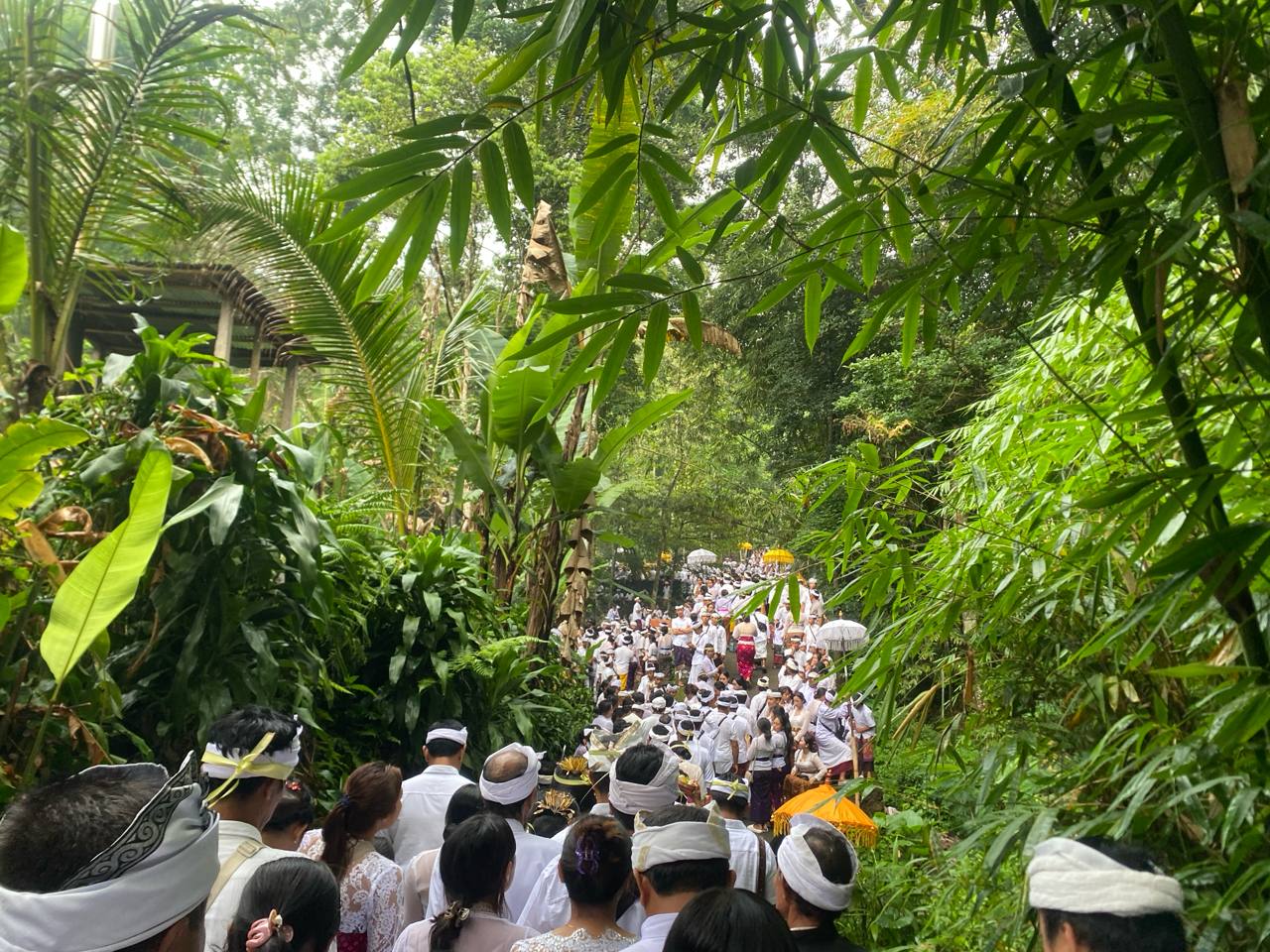
Crowds of residents gathered at Pemulungan Agung Temple, Gobleg Village. That day, November 4, 2025, was the last day of the melasti procession for Lilitan Karya.
At 1:00 PM, when the sun was directly overhead, the residents of Catur Desa were already prepared at the temple. In the main part of the temple, 91 married couples were performing the Mepamit process. This is a ritual where the bride-to-be asks permission from her family and ancestors to marry outside Catur Desa.
Meanwhile, in the jaba tengah (middle courtyard), residents of Catur Desa—consisting of Gobleg, Munduk, Gesing, and Umajero villages—gathered. The panjak penghulu, numbering in the hundreds, ate their meals.
At 2:00 PM, the worshippers began to ready themselves. The front row carried purification tools and offerings, such as banten (ceremonial offerings), banners, and jempane (palanquins).
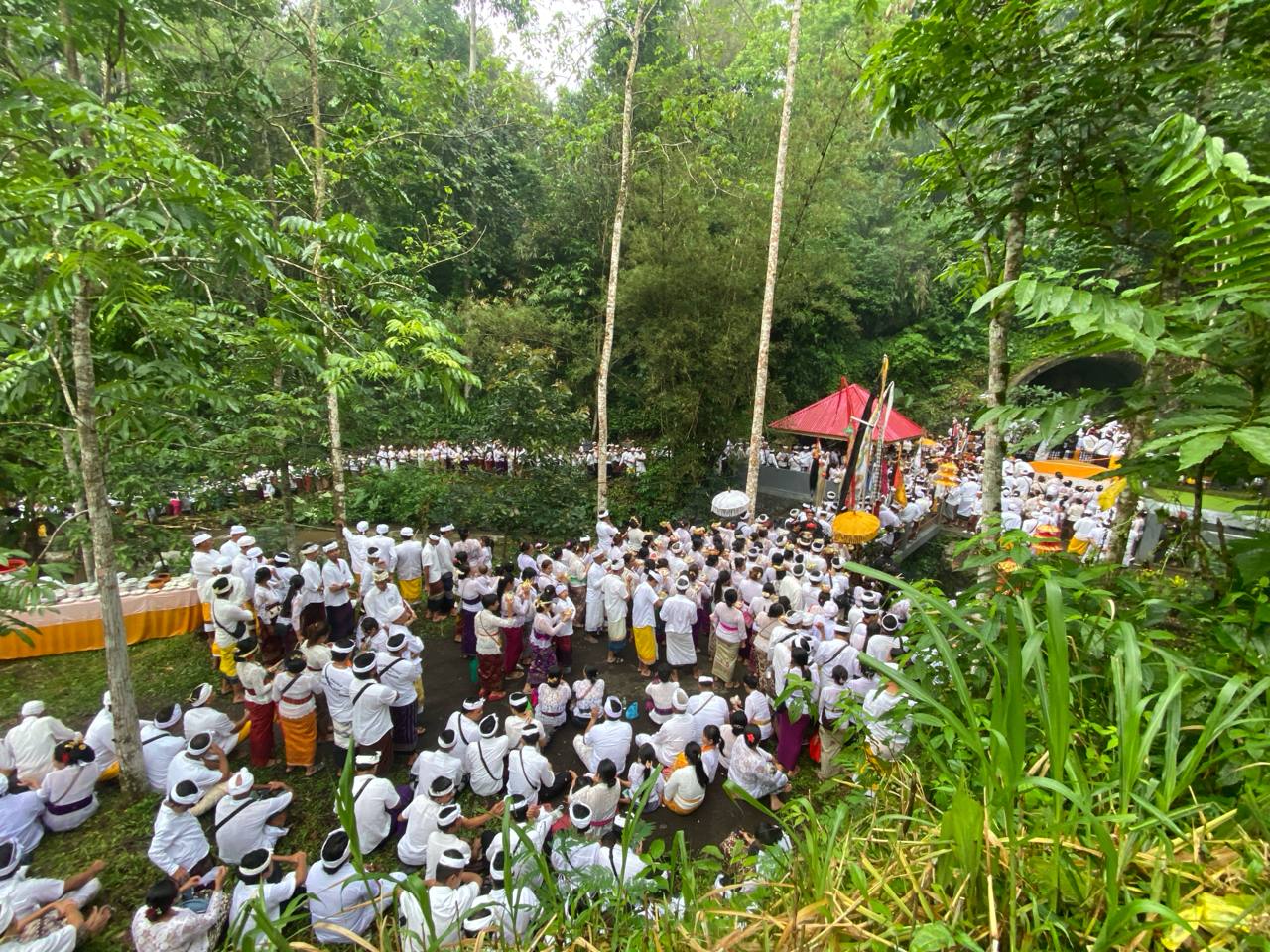
Hundreds of panjak penghulu formed a long line, starting to walk towards the water source. That day, the final destination was one of the water sources in ADT, Mendaung.
The journey was roughly 2 km, passing a crossroads temple, rivers, and forest. The sounds of birds and insects could be heard, as if accompanying the gamelan. The path wound up and down.
Upon arrival at Mendaung, tirta (holy water) was sprinkled onto the ceremonial offerings brought from Pemulungan Agung Temple. The ceremony concluded at sandikala, 6:00 PM. Once finished, the residents returned to their respective homes.
Lilitan Karya is a ritual to glorify water, held once every two years by the community of Catur Desa Adat Dalem Tamblingan. The series of ceremonies can last an entire year.
In 2025, the Lilitan Karya ceremony was designated as an Intangible Cultural Heritage by the Culture Office of Buleleng Regency. This ceremony reflects the purification of Alas Mertajati (Mertajati Forest), carried out for many years by the Indigenous Community of Dalem Tamblingan.
Purifying the Forest as an Ancestral Heritage
The existence of Catur Desa Adat Dalem Tamblingan (ADT) is found in various historical records. Three prasasti or inscriptions acknowledge ADT’s existence: the Ugrasena inscription (922 AD), the Udayana inscription (911–1018 AD), and the Suradipa inscription (1119 AD). These inscriptions mention small villages under the rule of Tamblingan Village, namely Hunusan, Pangi, Kedu, and Tengah-Mel.
Over time, Hunusan became known as Gobleg, Pangi became Gesing, Batu Mecepak became Umajero, and Tengah-Mel became Munduk. These four villages are the forerunners of the Dalem Tamblingan Indigenous Community.
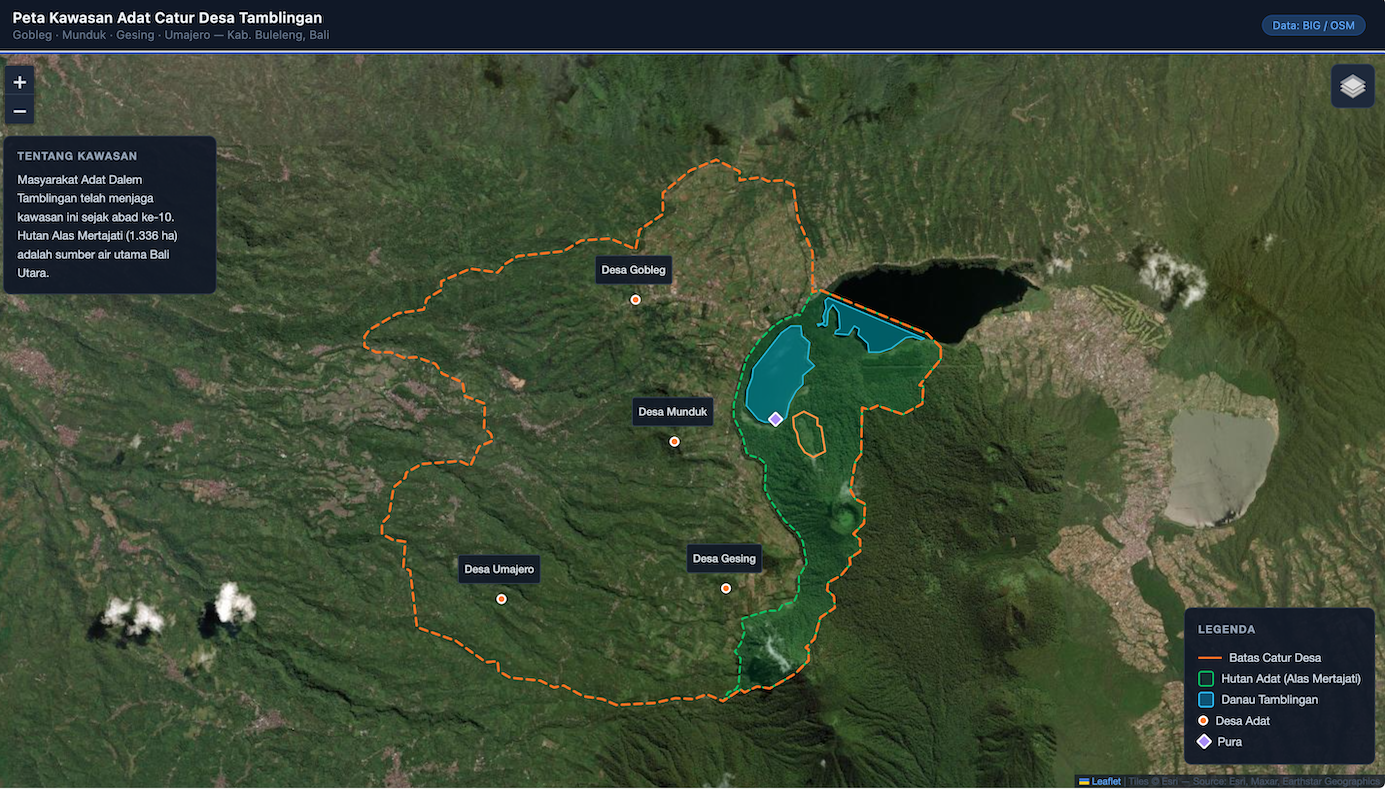
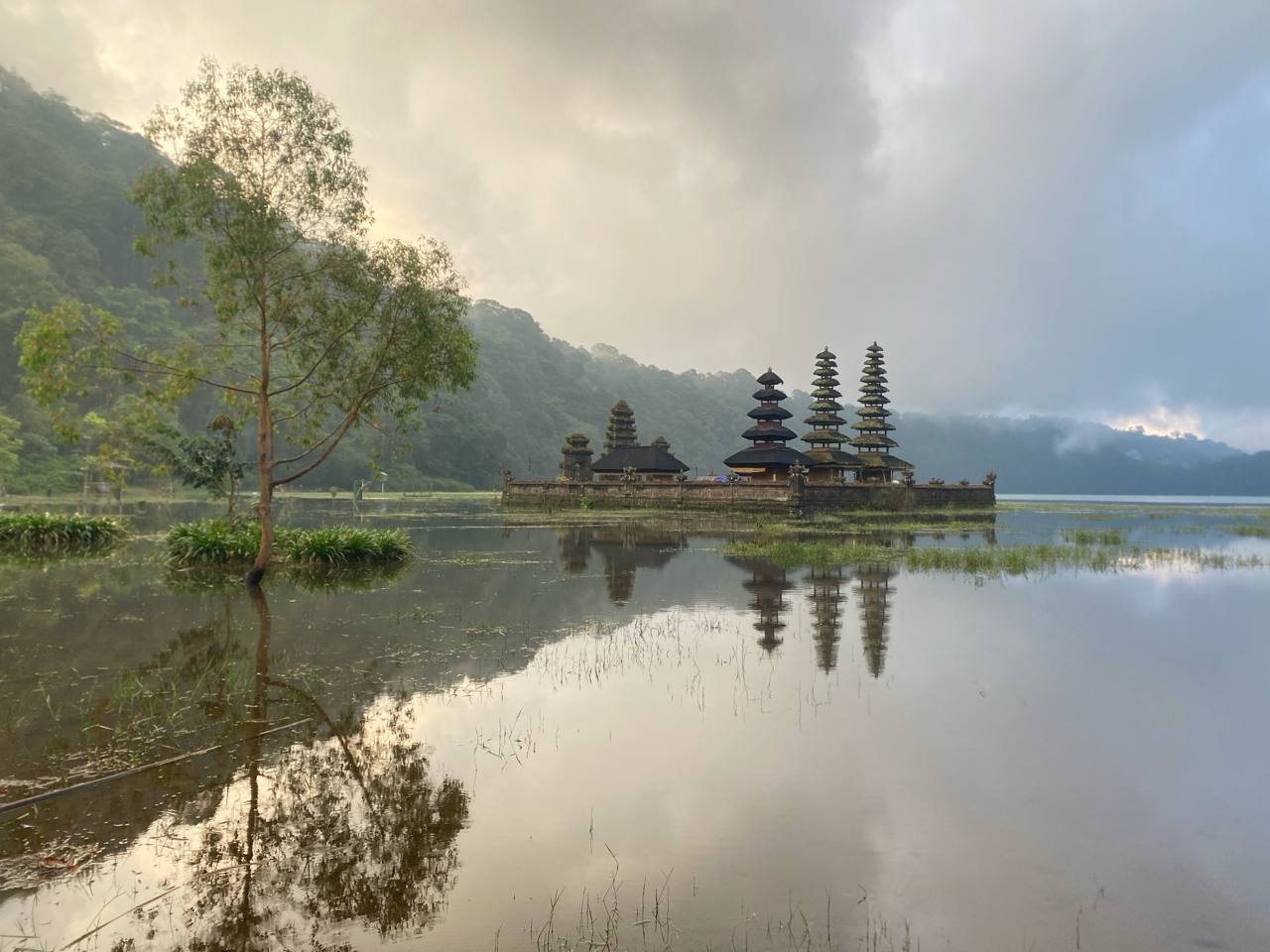
For years, MADT has upheld the message of their ancestors by not exploiting the forest surrounding Lake Tamblingan. This forest is called Alas Mertajati, meaning the true source of life.
Before the 14th century, MADT lived and dwelled within Alas Mertajati. However, to prevent damage and to purify the forest, MADT’s ancestors left the forest and moved outside its area.
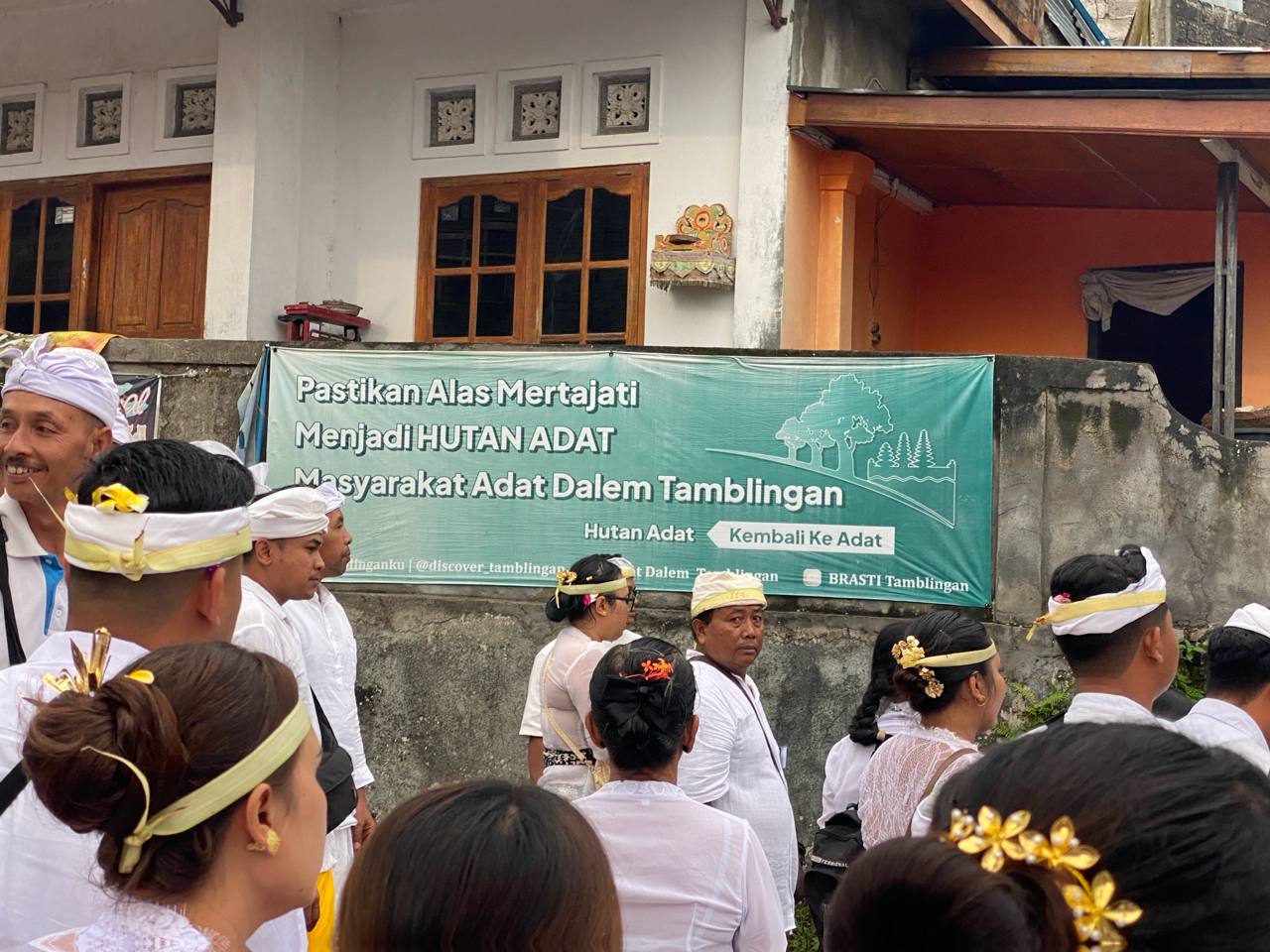
Reported by the Badan Registrasi Wilayah Adat (BRWA), the community living in Alas Mertajati at that time was struck by a plague. The plague was cured with water from within the forest. That water is what is referred to as Tamblingan.
The history of MADT’s existence is confirmed by Gede Yasmara, the Jro Balian of Catur Desa. The Jro Balian is tasked with leading traditional ceremonies in Catur Desa.
In the 14th century, the residents of Catur Desa began to descend to develop agriculture and maintain the sanctity of the forest.
“The community’s belief is that the forest is their soul,” said Gede Yasmara when met at his residence on Tuesday, May 19, 2026.
Since then, they have believed that if the forest is damaged, their souls are also damaged because the forest is their source of life.
During the Dutch colonial period, a number of forests in Bali were designated as tourism forests, including Alas Mertajati. This had implications for the forest’s status during the era of the Republic of Indonesia. Tourism forests were changed into Nature Tourism Parks.
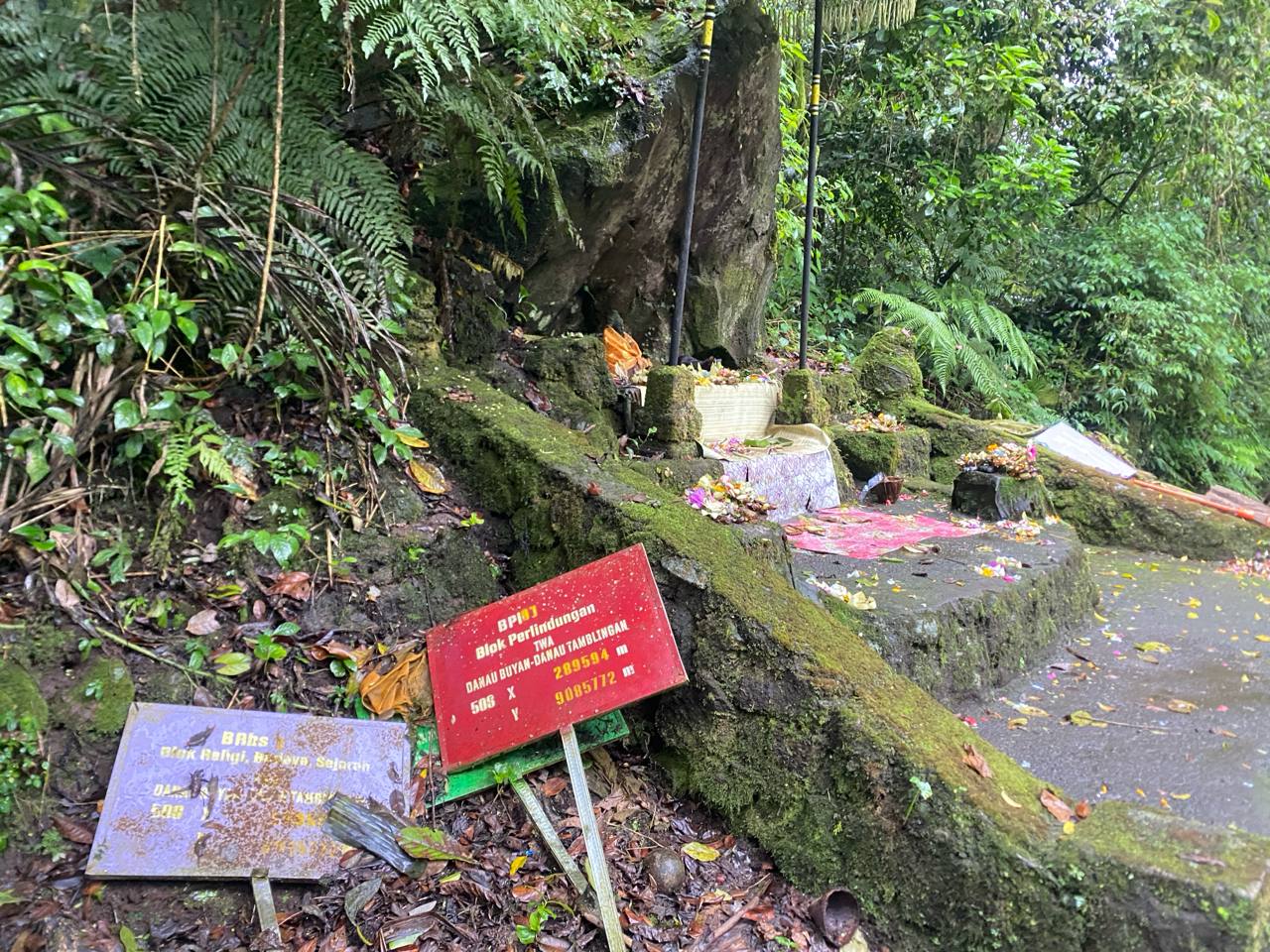
Alas Mertajati, including Lake Tamblingan, was designated as the Danau Buyan-Danau Tamblingan Nature Tourism Park (TWA) based on the Decree of the Minister of Forestry Number 144/Kpts-II/1996, with an area of 1,336.5 hectares. The TWA falls under the Ministry of Forestry, managed by the Natural Resources Conservation Agency (BKSDA).
The Turmoil of Alas Mertajati Under State Forest Status
As a TWA, the status of Alas Mertajati falls under state forest. While bound by this status, Alas Mertajati has repeatedly faced threats of environmental degradation, from illegal logging to the threat of tourism accommodation development.
“The biggest challenge faced is mischievous hands, not wild animals,” said Yasmara.
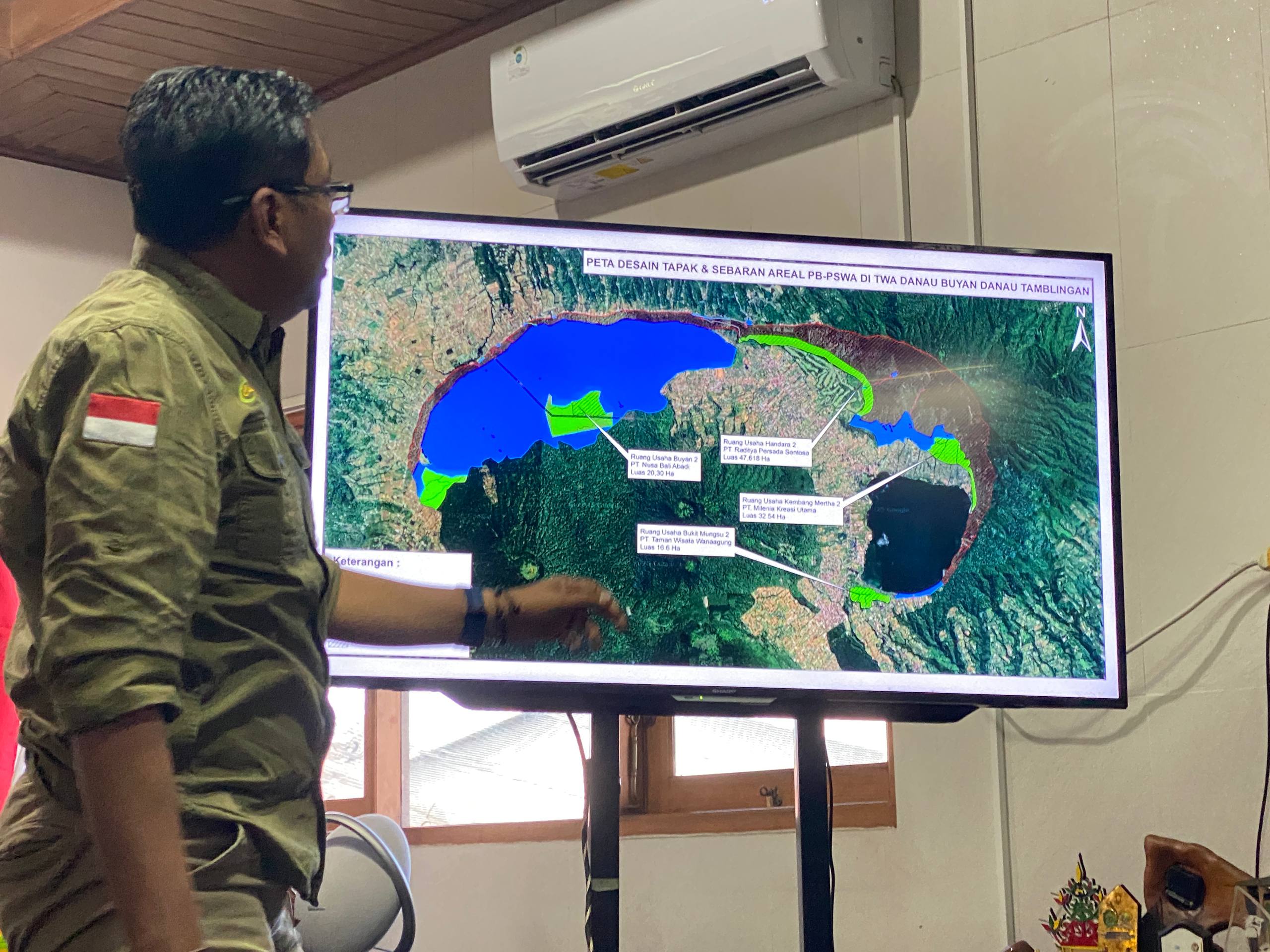
According to I Gusti Ngurah Agung Pradnyan, the Dane Pangrajeg or customary elder in ADT, there have been at least three major investment threats in Alas Mertajati. In 2008, PT Nusa Bali Abadi (NBA) planned to build a restaurant and water recreation park.
A public consultation was held in 2008. However, the residents boycotted it. This was because only customary elders were invited, not the entire community of Catur Desa. Four years later, in 2012, PT NBA’s development plan resurfaced. The community again rejected it.
“We staged a protest by praying (maturan) at the temple to reject the laying of the first stone,” said Agung Pradnyan when met at his residence on Tuesday, May 19, 2026.
Besides PT NBA, Agung Pradnyan also mentioned the construction of a treehouse in Alas Mertajati. Once again, this project was firmly rejected because it was deemed not in accordance with the values held by the Balinese community.
“We reject it. They brought a letter of support from the Director General of BKSDA. We reject this because that area is a place we sanctify; our village was once there, our body and soul are there. Don’t mess around. We defend it with our body and soul,” said Agung Pradnyan.
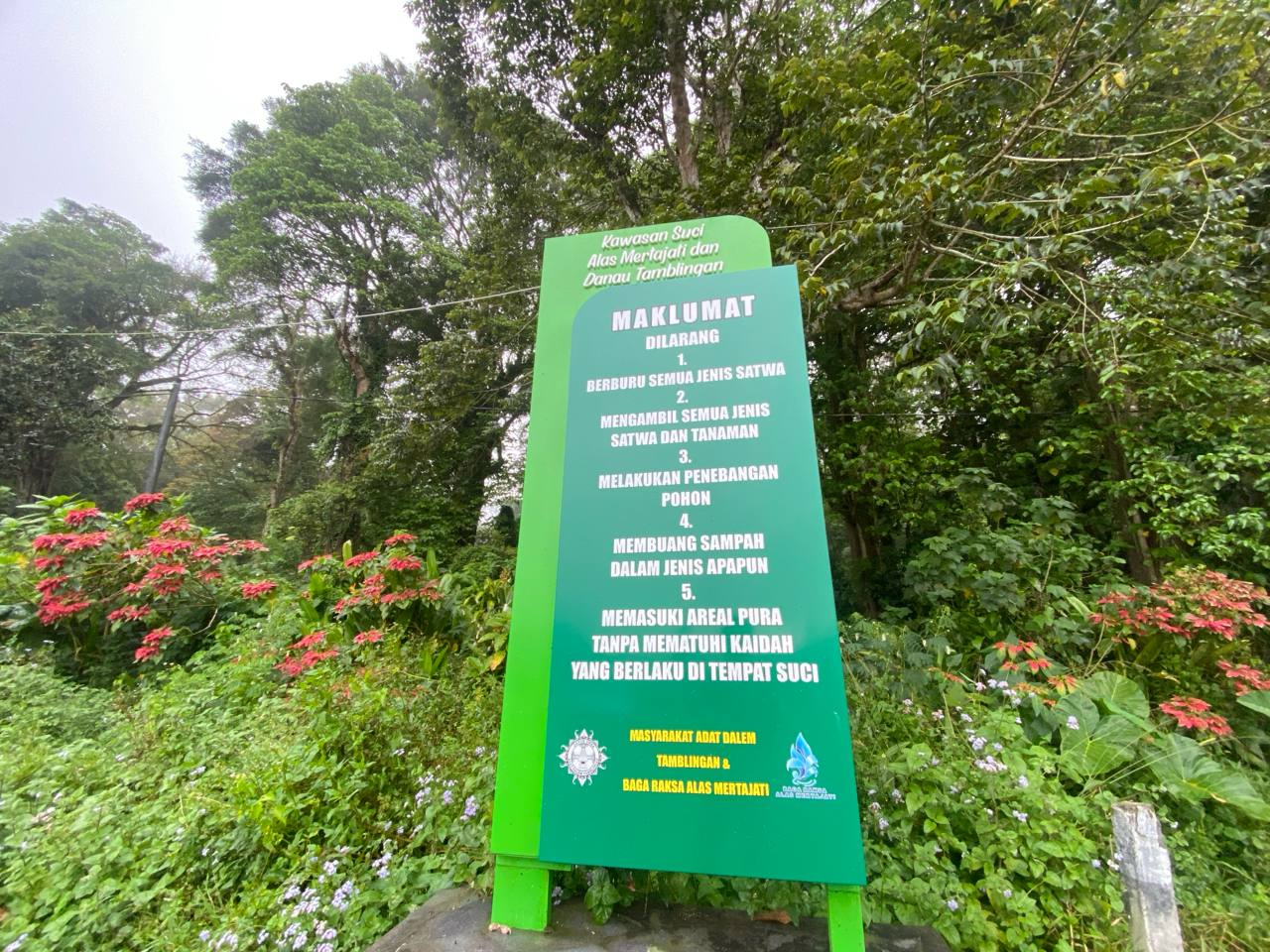
These numerous threats led the customary elders in Catur Desa to form Team 9 in 2008. This team was a temporary group consisting of representatives of customary elders from each village. Its task was to address external and internal customary problems. The chairman of Team 9 at that time was Putu Ardana.
About a decade after Team 9 was formed, ADT realized the need for customary forest recognition. The goal was to obtain full management rights and preserve ancestral values.
“The forest is the main source of life; it must not be tampered with. Only its seepage (limapasannya) may be taken,” said Putu Ardana when met at his residence on Tuesday, May 19, 2026, repeating the ancestral message passed down to this day.
This awareness was manifested through a participatory mapping of the ADT territory. This mapping involved young people and the indigenous community. The mapped area covered around 1,300 hectares and included an inventory of flora and fauna to identify rare plants in the forest.
Purifying the Forest Through the Younger Generation
The participatory mapping in 2019 was the precursor to the formation of the youth organization, Brasti. The name stands for Baga Raksa Alas Mertajati, guardians of the Mertajati Forest.
Brasti was initiated by Team 9. Putu Ardana deemed it necessary to pass down ancestral values to the youth.
“Brasti is a sort of transformation from us, the older indigenous community with traditional values and governance. We realize that we must anticipate the dynamics of the times,” explained Putu Ardana.
Putu Ardana noted that Team 9 was somewhat stumbling in dealing with problems that occurred from year to year. Therefore, Brasti emerged as a form of anticipation. Officially, Brasti was established in 2020 with four main objectives: to create a prosperous community, to preserve a sustainable landscape, to realize a cultured and culturally vibrant society, and to advance in all fields.
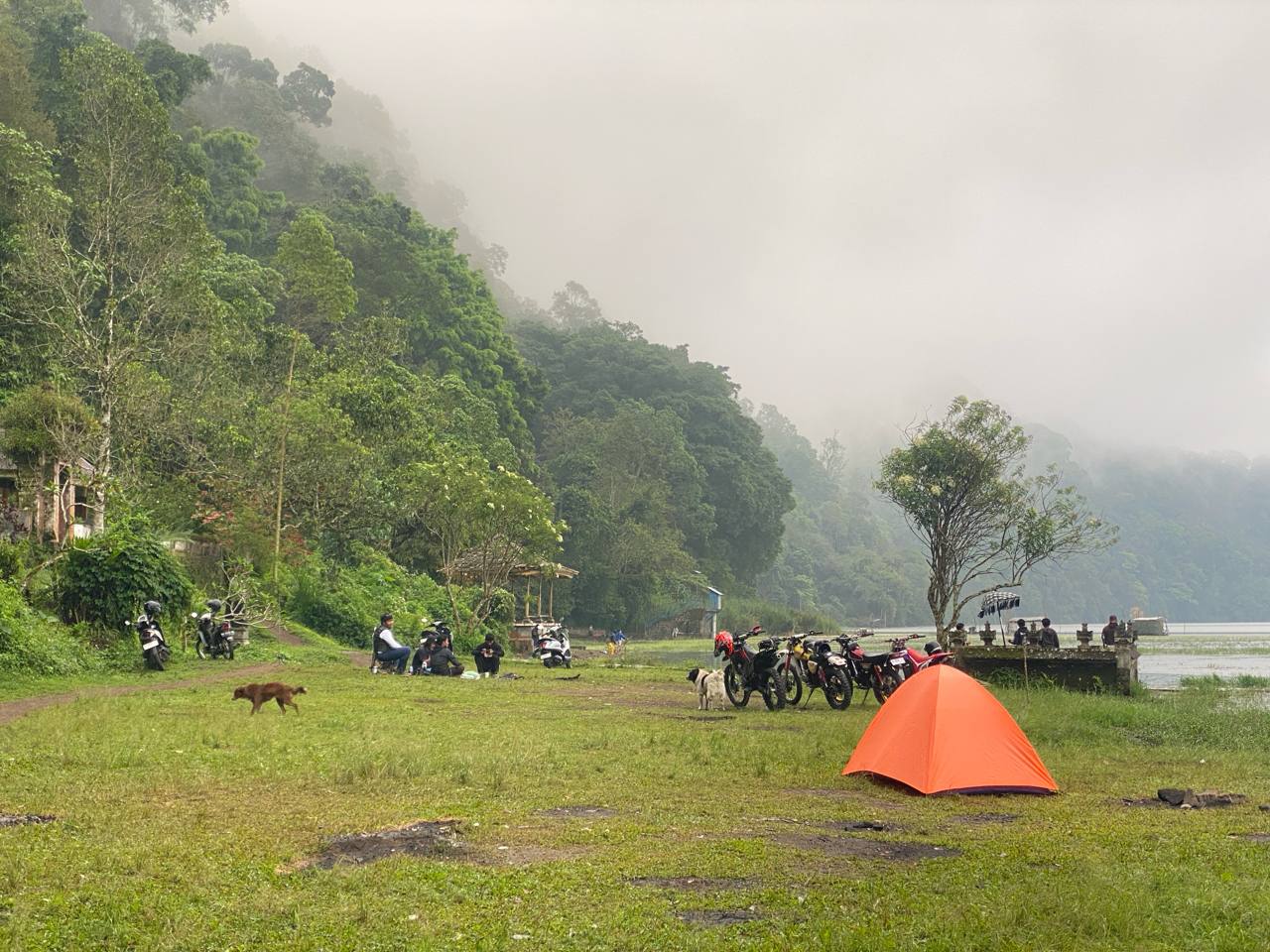
As an elder, Putu Ardana acts as a bridge to transfer ancestral values using a more understandable language. These ancestral values are realized in a number of programs, one of which is conservation economy.
As Putu Ardana stated, MADT may only utilize the ecosystem outside the forest. The aim is to prevent the forest from being damaged. Therefore, the conservation economy is present to strengthen the economy outside the forest so that the community does not exploit the forest.
“What is actually desired is how economic activities can, directly or indirectly, preserve the nature around here,” said Putu Gede Elman, one of the members of Brasti.
The economy developed outside the forest area is coffee farming. Coffee farming in ADT actually dates back to the colonial era. In the 1980s, coffee farming declined because it was considered unprofitable. It has only started to grow again in the last 10 years or so, with a more profitable method: petik merah (selective red picking).
Petik merah is a selective harvesting technique. Farmers only pick coffee cherries that are perfectly ripe, marked by red skin.
One form of conservation economy also carries the value of the customary forest struggle, namely ecotourism.
“Our final goal is how to make Brasti’s activities a starting milestone for changes in the form of tourism itself, how a conservation economy can be built,” said Elman.
Diandra Orissa, another member of Brasti, explained that this ecotourism emerged after Covid-19. Many young people from Catur Desa had migrated to Denpasar, Badung, or other areas to work in the tourism sector. When Covid-19 hit, many of them returned home, and some were even laid off from their jobs.
“It was also hard to go back to being farmers because the gardens weren’t taken care of during that time. Well, that’s when we realized, oh, it turns out we shouldn’t be this dependent on destructive and extractive tourism. We need to find a way how to balance tourism to also be environmentally friendly,” said Diandra.
Brasti then created educational tour packages. These educational packages are distributed to tour guides, including Brasti members who work in the tourism sector.
“The packages we offer are not mass tourism. So we tell the story from A to Z about what we do here, what happened, how the local people here preserve local wisdom—that’s what we tell. Because most of those who come here want to know about our struggle here,” explained Diandra.
The expansion of the struggle referred to is the struggle for the customary forest, which is still ongoing today at Alas Mertajati. One of the trekking routes in the ecotourism program passes through land that has undergone a change of function. The aim is to inform visitors that agricultural land conversion is still occurring in ADT.
Customary Forest Status Is Still Being Fought For
Ratna Hendratmoko, Head of the Bali BKSDA, confirmed the existence of a business permit in the Danau Buyan-Danau Tamblingan TWA. Around Lake Tamblingan, there is only one Business Permit for the Provision of Nature Tourism Environmental Services (PB PSWA), held by PT Nusa Bali Abadi.
The utilization area is 20.3 hectares. The validity period is 30 years, from 2008 to 2037. “NBA has not been operating since 2007,” said Moko when met at his office on Wednesday, June 10, 2026.
It has been more than five years since MADT began fighting for customary forest recognition, starting from mapping to the application for Indigenous Legal Community (MHA) status. Denik Puriati, Head of BRWA for the Bali region, has been a witness to MADT’s struggle.
In 2021, facilitated by BRWA, MADT submitted a proposal for customary forest status to the Ministry of Environment and Forestry. The submission was received, but there has been no written response from the ministry.
Denik says that the submission for Alas Mertajati customary forest is different from other indigenous communities. This is because Catur Desa ADT is not registered as a desa adat (customary village), but rather as a community that has purified the forest for generations.
“Based on the Minister of Home Affairs Regulation, MADT’s recognition as an Indigenous Legal Community (MHA) must be carried out by the Buleleng Regency Government through the issuance of a Regent’s Decree,” explained Denik when contacted by phone on Saturday, May 30, 2026.
In late 2025, BRWA coordinated and submitted a draft decree and the committee structure for MHA verification. To this day, the process is still held up at the legal department of the Buleleng Regency Government.
According to Denik, in Bali, many forests belong to desa adat and are sanctified under customary law. However, many forests have also been taken over to become state forests since the Dutch era.
The Social Forestry scheme and the Job Creation Law actually grant forest management rights to the administrative village (desa dinas), not the desa adat. Denik considers this could diminish the role of desa adat.
However, in Catur Desa ADT, the Social Forestry policy is being used for customary forest recognition.
“This Social Forestry is what underlies why MADT is applying for customary forest status. It’s also fortunate that this Social Forestry exists, so we know that the state-owned forest which we wanted to be returned as customary forest can be applied for through this Social Forestry. Well, that’s what we are using to reapply, to take over the Alas Mertajati area as a customary forest,” explained Denik.
To this day, the struggle for the customary forest continues. Both the older and younger generations are spreading the word of their struggle through various means, including cultivating awareness in the next generation.
“Alas Mertajati is not just a forest; it is the source of life, and its impact is huge for us,” concluded Diandra.
Original article in Indonesian: https://balebengong.id/jalan-panjang-desa-adat-mengelola-sumber-kehidupan-alas-mertajati/
Translation by Hamzah.
sangkarbet sangkarbet sangkarbet