
Queues in Kapal
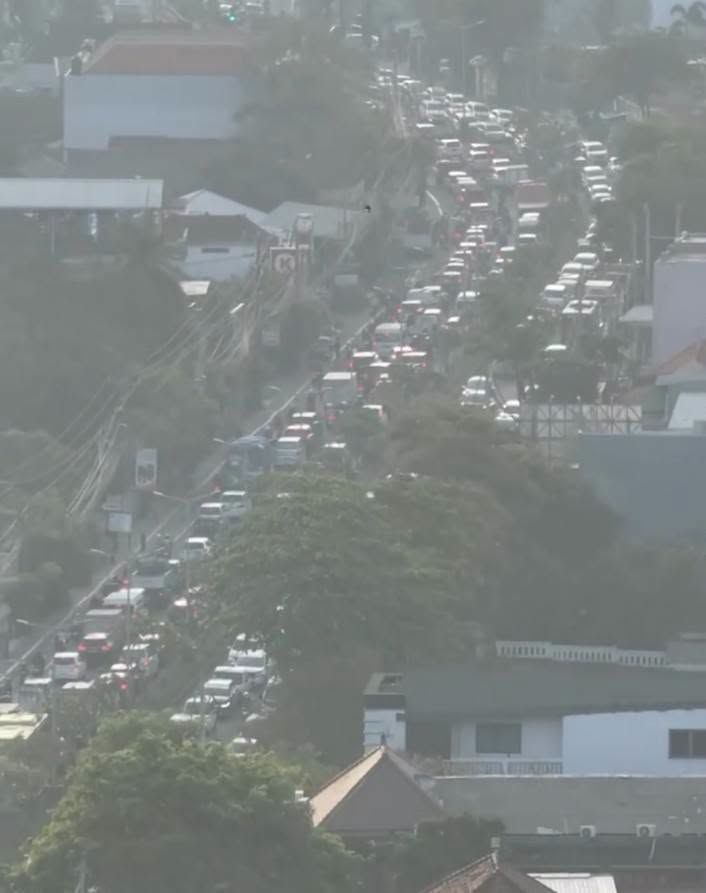
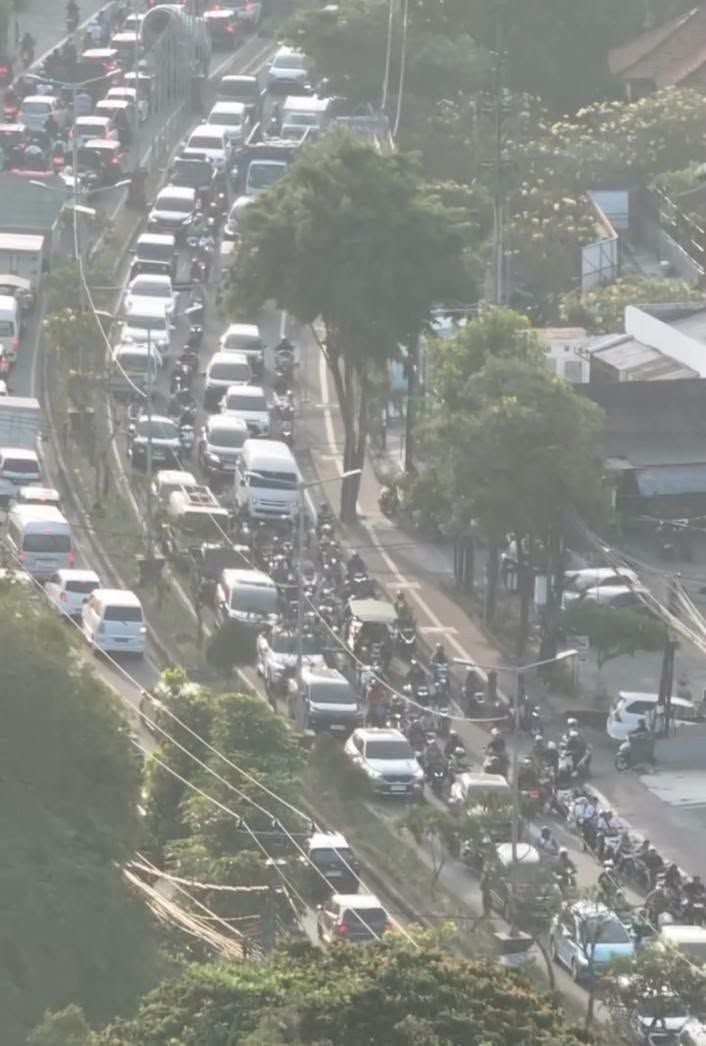
Monday, 12 October 2026, half past six in the evening. The queue at the petrol station (SPBU) in Kapal, Mengwi, had spilled out of the forecourt and stretched onto the Denpasar–Gilimanuk highway. A detikBali reporter at the scene noted that riders who joined the line at that hour only reached the pump at 7.50 pm.
Gede Ari was one of them. He lives in Tabanan and was on his way home from work in Seminyak. Before coming to Kapal, he had already tried several stations around Dalung, North Kuta. "I've been all around Dalung, it was still packed, so I came here."
In Jembrana, at Bali's western tip, it was worse. Three stations in the town of Negara had run dry. Putu Suryacita, 31, a local resident, pushed his motorbike so far that he had to call a friend for help. "It's unusual for everything to run out. Normally at least one station still has Pertamax," he said.
Nyoman Werni, a construction labourer and mother of three, was told by an attendant to buy Pertamax Turbo, the most expensive petrol at the pump. She joined the line. But the Pertamax Turbo also ran out before her turn came. "Where will I find petrol to get to work tomorrow?"
The next morning, Tuesday, 13 October, queues appeared in Klungkung. Pertalite ran out at the stations in Besang, Siku and Batu Tabih. Residents had been arriving since seven in the morning to buy Pertamax. "It has almost never been this bad," Budiarta told detikcom.
In Badung, a ride-hailing driver chose to buy the pricier Pertamax before his tank ran empty. "I've still got one bar, but I'm scared of running out in the middle of the road," he told ATNews. "Better to just buy Pertamax than lose my passengers."
I Made Rai Warsa, a member of Commission III of the Bali provincial legislature, called on Pertamina to be open. "Explain honestly how much fuel is available," he said.
The government and Pertamina offered three explanations.
Bali Governor I Wayan Koster blamed residents for panic buying. "Supply is sufficiently available at the depots, at Manggis and at Pesanggaran it is here today," he said on 13 October 2026. According to Koster, fuel trucks were stuck in traffic on their way to the stations.
Pertamina Patra Niaga's Jatimbalinus regional unit said Pertalite consumption had risen about 12 percent, to 2,200 kilolitres a day, because Pertamax users were switching to Pertalite.
Pertamina president director Simon Aloysius Mantiri apologised. He said one tanker that was due to berth at 6.30 am Central Indonesia Time (WITA) on 12 October 2026 could only begin unloading at around 10 pm WITA because of an anchor problem.
All three explanations describe a problem that came out of nowhere. We tested whether it really was sudden by examining the ships that carry fuel to Bali.
This report reads the official records of ship arrivals and cargo handling at Bali's ports over two years, from October 2024 to 14 October 2026. The records belong to the port authorities under the Ministry of Transportation. They show which ships arrived, from where, when, and carrying what. The entries are typed in by shipping agents when a vessel is about to unload. The port data tells what Pertamina officials and the Governor of Bali did not.
What really happened, and what was left unsaid?
Bali has no oil refinery. All the petrol sold in Bali arrives by sea.
The main gateway is the Manggis fuel terminal in Karangasem, in eastern Bali. In port records, the terminal falls under the Port of Padangbai. From August 2025 to September 2026, nearly 8 in every 10 parts of the petrol shipped to Bali from outside the island were unloaded at Manggis. The rest was unloaded at the Sanggaran terminal in Denpasar, which port records place under the Port of Benoa. Sanggaran also receives fuel from Manggis by small tanker. The Sanggaran terminal sits near Banjar Pesanggaran, Pedungan village, South Denpasar.
Pertalite reaches Manggis on large tankers, mostly from Pertamina depots and refineries in Java: Merak, Balongan, Tuban and Tanjung Priok. Over the past two years, such a ship has arrived on average once every 9 to 10 days.
If the shortage had been caused by late ships, as provincial officials and Pertamina suggested, the gaps between one ship and the next should have been longer than usual. That is only partly true. Between 11 and 24 September there was indeed a 13-day gap, longer than usual. But after that the schedule returned to normal. GREEN PLUS unloaded Pertalite at Manggis on 24 September. PHOENIX CROWN arrived 9 days later, on 3 October. PRIMA XP came 8 days after that, on 11 October. In the last two weeks before the queues, no Pertalite tanker was late.
In the run-up to the queues, the ships arrived on time. What changed was where they came from and how much they carried.
| Estimated arrival | Ship | Origin | Pertalite (kilolitres) |
|---|---|---|---|
| 14 August | PHOENIX CROWN | Merak | 31,846 |
| 28 August | GREEN PLUS | Merak | 22,002 |
| 4 September | PHOENIX CROWN | Merak | 17,928 |
| 11 September | GREEN PLUS | Merak | 22,013 |
| 24 September | GREEN PLUS | Balikpapan | 15,786 |
| 3 October | PHOENIX CROWN | Bau-Bau | 10,357 |
| 11 October | PRIMA XP | Balongan | 18,000 |
Over the past 14 months, half of the Pertalite tankers calling at Manggis carried between 16,000 and 22,000 kilolitres, with a median of 19,000. The last three ships before the queues, GREEN PLUS, PHOENIX CROWN and PRIMA XP, carried between 10,000 and 18,000 kilolitres, all below that median. Loads this small were not unprecedented. In July 2026, GREEN PLUS twice arrived with 8,000 and 10,000 kilolitres, and there were no queues.
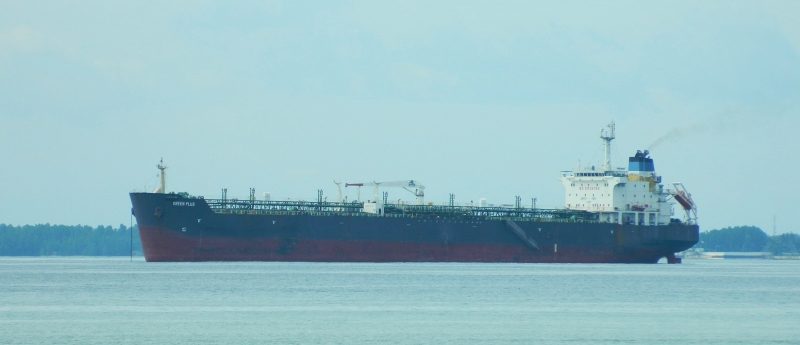
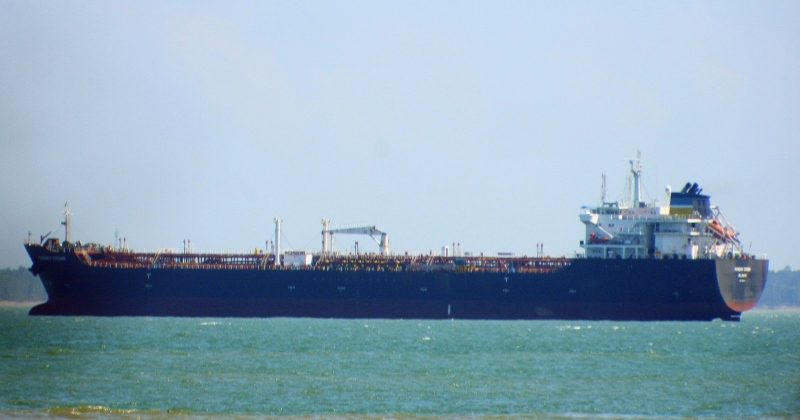
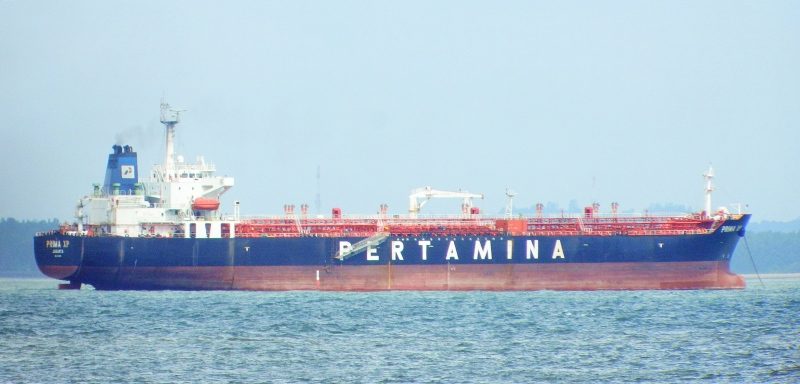
PRIMA XP's cargo, 18,000 kilolitres, matches the figure the Bali provincial government gave for the ship that arrived on 11 October.
In the month before the queues, 12 September to 11 October, three ships unloaded about 44,000 kilolitres of Pertalite at Manggis. In the same period last year, 12 September to 11 October 2025, three ships brought 57,000 kilolitres. That is a drop of almost a quarter. In the month before that, 13 August to 11 September 2026, four ships unloaded nearly 94,000 kilolitres, the highest 30-day total in 14 months, following the August queues.
On average, Pertalite arriving at Manggis in the month before the queues came to only about 1,470 kilolitres a day. Pertamina says all of Bali needs 2,200 kilolitres a day. Pertalite supply to Manggis was far below what Bali needs.
For more than a year, all the Pertalite unloaded at Manggis came from Java: Merak, Balongan, Tuban, Tanjung Priok, Cilacap, Semarang, Surabaya, Banyuwangi and Situbondo.
The last two deliveries before the queues came from somewhere else. GREEN PLUS, which arrived on 24 September, sailed from Pertamina's terminal in Balikpapan, East Kalimantan. Until then, this ship had always come from Java, mostly from Merak.
PHOENIX CROWN took a longer route. It left Manggis on 6 September bound for Balikpapan. When it returned to Manggis on 3 October, its last port of call was Bau-Bau, Southeast Sulawesi. Bau-Bau is a port that receives fuel, not one that ships it out.
In other words, in the three weeks before the queues, Bali was no longer being supplied from the Java depots that normally ship to Manggis. Supply came from Balikpapan, and part of it was probably what was left of a cargo after the ship had stopped in Bau-Bau. Pertamina has not explained why.
Pertamina's argument that the Pertalite queues happened because Pertamax users switched to Pertalite is also open to question. Port records show that Pertamax supply to Bali fell too, even more sharply than Pertalite.
In the month before the queues, the same ships unloaded about 9,900 kilolitres of Pertamax at Manggis. The month before, 30,000. In the same period last year, 29,000. Pertamax supply to Manggis is now a third of last year's. Pertamax deliveries this low were also recorded in March and April 2026.
GREEN PLUS, which carried 10,000 kilolitres of Pertamax on 28 August, brought only 2,238 kilolitres on 24 September. PRIMA XP also carried only about 2,500 kilolitres.
That matches what residents experienced. In Jembrana, Putu Suryacita was surprised that Pertamax had run out at every station. Nyoman Werni was directed to Pertamax Turbo, and then the Pertamax Turbo ran out too.
Diesel supply fell as well. In the month before the queues, Manggis received 60,000 kilolitres of diesel. In the same period last year, the figure was 141,000 kilolitres. Diesel supply to Manggis fell 57 percent.
A Tangle at Manggis and Sanggaran
Manggis does not serve Bali alone. From this terminal, small tankers carry Pertalite and diesel to Badas on Sumbawa, Bima, Ampenan and Lembar on Lombok, and as far as Maumere on Flores. Since August 2025, port records have logged 115 loadings of Pertalite at Manggis for destinations outside Bali, most of them to Badas.
Those shipments carried on even as supply to Manggis thinned. On 20, 25 and 30 September and 4 October, the ANDHIKA ARISA loaded about 950 kilolitres of Pertalite each time to take to Badas. On 5 October, FADILLA loaded 775 kilolitres of Pertalite for Badas. On 6 October, five days before Bali's stations began to run dry, SUKSES GLOBAL loaded 1,933 kilolitres of Pertalite, also bound for Badas.
In total, in the month before the queues, about 7,800 kilolitres of Pertalite were shipped from Manggis to Nusa Tenggara. That was actually less than the month before, 16,900 kilolitres, and less than the same period last year, 17,400 kilolitres. Pertamina appears to have already cut shipments out of Bali. But after subtracting them, the Pertalite left for Bali from Manggis came to only about 36,000 kilolitres for the month, or 1,210 kilolitres a day.
That is 55 percent of the daily requirement Pertamina cites, 2,200 kilolitres. In the month before, the Pertalite left for Bali from Manggis was about 2,560 kilolitres a day.
The gap between what came in and what was sold had to be covered from stocks in the tanks at Manggis and Sanggaran. How large those stocks were, the port records do not say. Governor Koster said supply at the depots was sufficient. The port data shows those depots were being drawn down for a whole month, because less was coming in than going out.
A 30-day figure like this rises and falls depending on how many ships happen to arrive within the window. Over the past 14 months, Pertalite supply for Bali has dropped to around 1,000 kilolitres a day without queues following, for example in April 2026. So low supply alone does not explain the October queues. The difference this time is that low supply coincided with other things: deliveries from a route never used before, no recorded direct shipments to Sanggaran, and, by Pertamina's own account, a 12 percent rise in Pertalite consumption.
Denpasar and Badung, the areas with the longest queues, are mostly served by the Sanggaran terminal at Benoa. According to Pertamina, on 28 August Sanggaran distributed 424 kilolitres of Pertalite in a single day.
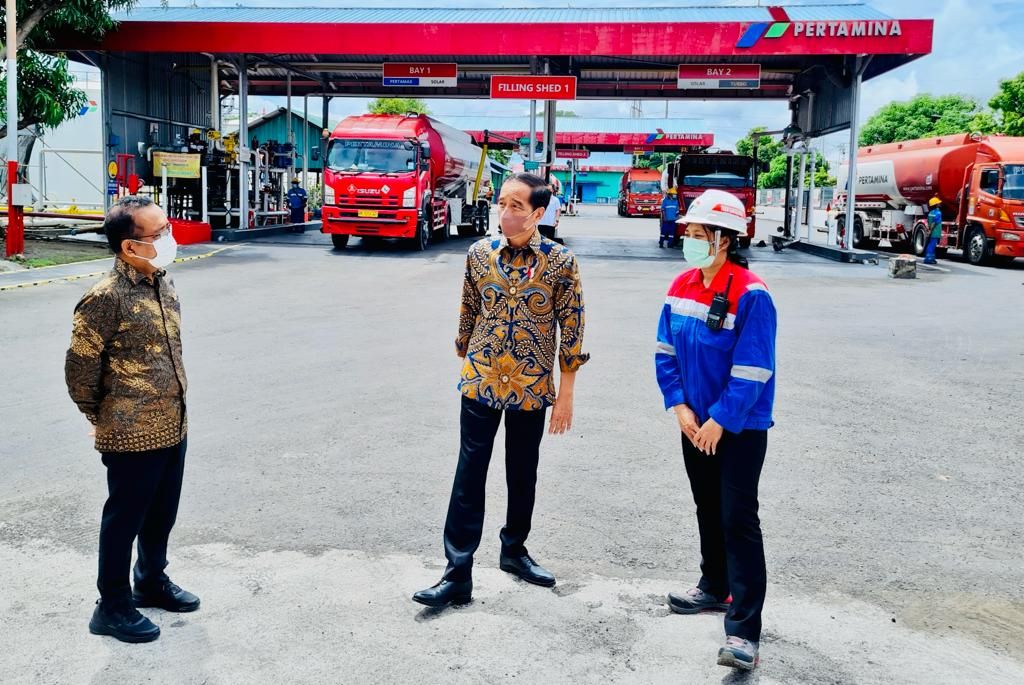
Sanggaran gets its Pertalite through two channels: small tankers from Manggis, and ships coming directly from outside Bali, such as from Surabaya, Banyuwangi or Tanjung Priok. It was the second channel that disappeared before the queues.
In the same period last year, 12 September to 11 October 2025, ships from outside Bali unloaded about 11,300 kilolitres of Pertalite directly at Benoa. In the month before that this year, 13 August to 11 September 2026, the figure was about 8,000 kilolitres, including from LINEO 101 and SUKSES GLOBAL arriving from Surabaya. In the month before the queues, 12 September to 11 October 2026, not a single direct Pertalite delivery from outside Bali was recorded at Benoa. In 14 months, this was the only 30-day stretch without a recorded direct delivery.
All the Pertalite recorded as unloaded at Benoa that month was carried by a single small tanker, ASIAN RIGEL, which loaded it at Manggis. The ship unloaded three times, about 7,100 kilolitres in total. In the same period last year, Benoa received 14,100 kilolitres from eight unloadings.
Counting direct deliveries to Benoa, Bali received about 1,700 kilolitres of Pertalite a day in the same period last year. This year, about 1,210 kilolitres. That is a drop of almost 30 percent, even though Pertamina says consumption went up.
On 27 September, ASIAN RIGEL unloaded 2,873 kilolitres of Pertalite at Benoa. Its next arrival, on 6 October, brought only 1,878 kilolitres. Between those two dates, nine days passed with no recorded Pertalite unloading at Benoa. Normally, a petrol carrier unloads at Benoa every two days.
From May to July 2026, Benoa received 33,000 to 51,000 kilolitres of petrol a month, from both small tankers out of Manggis and direct deliveries from outside Bali. In August the figure fell to about 24,000, and in September to 23,000. Diesel shipped directly to Benoa from outside Bali in September came to only 1,273 kilolitres. It is usually in the tens of thousands of kilolitres.
The Benoa figures cannot be fully relied on yet. In September, 12 of the 36 tankers calling at Benoa did not fill in their cargo volume. Four of them, PLAJU, MPMT XII, BALONGAN and OLYVIA T, were registered to PT Pertamina Trans Kontinental, a Pertamina subsidiary. PLAJU and MPMT XII usually carry jet fuel for the airport. BALONGAN, which arrived from Balikpapan on 28 September, recorded no cargo at all. In October, only two of eight tankers filled in their cargo volume. KLASOGUN did not, even though Pertamina says the ship brought Pertalite and Biosolar to Sanggaran on 13 October.
Not So Sudden
The government and Pertamina explained Bali's queues with three things: residents panic buying, rising Pertalite consumption, and one ship held up by an anchor problem. All three describe a problem that struck suddenly, within days or hours.
The port records show a problem that built up over a month. Ships kept arriving at Manggis on schedule, but for the first time in 14 months supply was drawn from Balikpapan instead of the Java depots, and the loads were below normal. Pertamax and diesel shrank too. Direct deliveries to Sanggaran, the terminal serving Denpasar and Badung, were not recorded at all. In the month before the queues, Pertalite reaching Bali came to only about 1,210 kilolitres a day, while by Pertamina's own figure Bali needs 2,200.
A ship delayed by its anchor may well have existed. Port records list GRIYA CIREBON, the largest tanker to call at Manggis this month, which sailed from Cilacap and was scheduled to arrive on 12 October at 9.30 pm, close to the "around 10 pm" cited by Pertamina's president director. But the ship arrived when Bali's stations had already been empty since the day before. A delay of a few hours only had such a large effect because stocks had already been drained by a month of short supply.
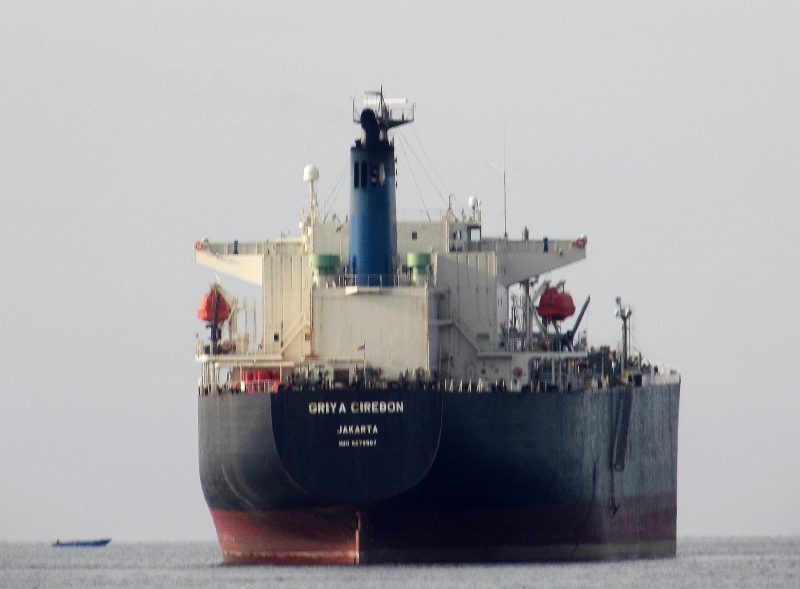
Pertamina has scheduled an additional 26,200 kilolitres of fuel on ships arriving on 12, 14 and 16 October. Those ships may be enough to clear this week's queues. The bigger questions remain unanswered: why did the last three ships to Manggis carry less than usual? Why was supply shifted to Balikpapan? Why did direct deliveries to Sanggaran stop? And how much stock was really in the tanks at Manggis and Sanggaran when the Governor said supply was sufficient?
Fuel delivery and stock data by province cannot be downloaded from the websites of Pertamina or the downstream oil and gas regulator BPH Migas. Without that data, residents only hear explanations after the queues have formed. The port records show the warning signs were visible from mid-September.
In Jembrana, Nyoman Werni went home without petrol after the Pertamax Turbo ran out too. Her question that night was simple: "Where will I find petrol to get to work tomorrow?" As long as Pertamina has not explained why supply to Bali was allowed to thin for a whole month, the same question could come up again.